
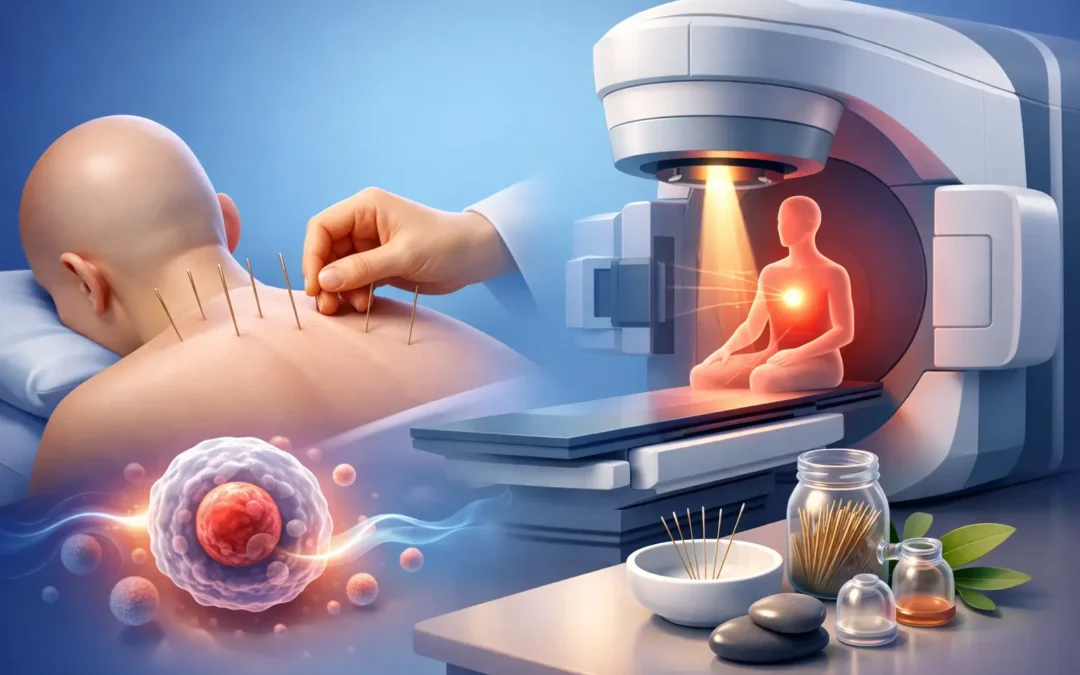
Radiation treatment can ask a great deal of the body while you are also trying to keep up with appointments, meals, family, work, and rest. Acupuncture for radiation side effects offers a gentle form of supportive care for people seeking more comfort and steadiness alongside their oncology treatment plan. It does not replace radiation, medication, or guidance from your cancer care team. It is a complementary approach designed to help you feel more supported through difficult symptoms.
For many people, the hardest part is not one symptom alone. Fatigue can make sleep feel less restorative. Dry mouth can affect eating and speaking. Pain, anxiety, or hot flashes can make it harder to settle into the day. Personalized acupuncture care considers these connections and focuses on improving day-to-day quality of life.
What Radiation Side Effects Can Feel Like
Radiation side effects vary based on the part of the body being treated, the dose and schedule of treatment, other therapies you may be receiving, and your own health history. Some symptoms begin during treatment, while others can linger after treatment has ended.
People may experience skin tenderness, localized pain, nausea, low appetite, constipation or diarrhea, fatigue, sleep disruption, anxiety, and difficulty concentrating. Radiation to the head and neck region can contribute to dry mouth, changes in taste, jaw tension, or discomfort with swallowing. Pelvic treatment may bring bowel, bladder, sexual-health, or hot-flash concerns. These symptoms are real, and they can affect far more than physical comfort.
A supportive-care plan should make room for the emotional side of treatment, too. Feeling worried before an appointment, frustrated by a changing body, or exhausted from having to manage symptoms every day is understandable. Care that addresses both the body and the nervous system can offer a meaningful sense of relief and personal agency.
How Acupuncture for Radiation Side Effects May Help
Acupuncture uses very thin, sterile needles placed at selected points on the body. From a traditional East Asian medicine perspective, treatment supports the balanced movement of Qi, or vital energy, throughout the body. In a modern supportive-care setting, sessions are tailored around the symptoms that are most affecting your comfort, rest, and ability to function.
Research and clinical experience suggest acupuncture may be helpful for certain cancer-treatment symptoms, particularly nausea, pain, anxiety, sleep concerns, fatigue, and dry mouth. Results are individual. Some people notice a shift in relaxation or sleep after an early session, while others need several treatments before recognizing a meaningful change. The goal is not to promise a cure for every side effect. It is to reduce symptom burden where possible and help you feel more at home in your body during treatment.
Dry Mouth and Changes in Oral Comfort
Persistent dry mouth can make meals, conversations, and sleep surprisingly difficult. It may also affect taste, oral comfort, and dental health. Acupuncture is sometimes used as a supportive option for radiation-related dry mouth, especially after head and neck treatment. Your practitioner may also discuss practical comfort measures, such as hydration routines and ways to protect the mouth, while your oncology and dental teams monitor your needs.
Nausea, Appetite, and Digestive Discomfort
Nausea does not always follow a predictable schedule. It can be connected to treatment, medication, anxiety, pain, or changes in eating patterns. Acupuncture and acupressure may help some people manage nausea and promote a calmer digestive response. Treatment can be especially valuable when symptoms make it difficult to eat enough, stay hydrated, or take prescribed medications comfortably.
Pain, Tension, and Reduced Mobility
Pain can come from the treatment area, surgical recovery, muscle guarding, changes in posture, or stress held in the body. Acupuncture may be combined with gentle acupressure massage, Tui Na, or carefully selected electro-acupuncture when appropriate. These modalities are not one-size-fits-all. The right approach depends on your diagnosis, treatment location, skin condition, blood counts, medications, and comfort level on that day.
Fatigue, Sleep, and Emotional Strain
Cancer-related fatigue is more than ordinary tiredness. Rest may not fully restore energy, and even small tasks can feel demanding. Acupuncture sessions can create protected time for the nervous system to settle, which may support sleep, ease physical tension, and improve a sense of calm. When sleep is interrupted by worry, discomfort, hot flashes, or racing thoughts, this restorative effect can matter.
Safety Comes First During Radiation Care
The safest acupuncture care begins with communication. Your acupuncturist should know your diagnosis, treatment schedule, current symptoms, medications, recent procedures, and any instructions from your oncology team. It is also helpful to share changes as they happen, including fever, infection, bruising, new swelling, dizziness, or a sudden increase in pain.
Needling is generally avoided directly through irradiated skin, open wounds, active rashes, areas of infection, tumor sites when clinically inappropriate, and regions affected by lymphedema risk unless your medical team has advised otherwise. Extra care may be needed if you have low white blood cell counts, low platelets, are taking blood thinners, or have an implanted medical device. Electro-acupuncture is not appropriate for everyone, including many people with certain implanted electrical devices.
A qualified practitioner will adjust the treatment rather than push through discomfort. On some days, a quiet session with fewer needles may be the most supportive choice. On others, acupressure, gentle bodywork, or a focus on stress regulation may be more suitable. Your body and medical needs set the pace.
What a Personalized Session May Include
An acupuncture appointment for radiation support begins with listening. Your practitioner may ask about sleep, energy, appetite, digestion, pain patterns, mouth dryness, temperature changes, mood, and the practical moments that feel hardest. You do not need to arrive with a perfect explanation of what is wrong. Describing what has changed in your day is often enough to guide care.
Treatment may include acupuncture alone or an integrated combination of acupuncture, acupressure, Tui Na, cupping when appropriate, and Qi-balancing techniques. Some patients also benefit from wellness assessment tools that help track stress patterns and recovery over time. The purpose is not to add another demanding item to your schedule. It is to create care that meets you where you are.
Most people rest comfortably on a treatment table during the session. The needles are typically retained for a short period while you relax. You may feel a mild sensation of heaviness, warmth, tingling, or release around a point, but treatment should not be painful. Afterward, some people feel deeply relaxed; others feel refreshed or notice gradual changes over the next day or two.
Timing Treatment Around Your Oncology Plan
There is no single ideal schedule. Some people choose weekly sessions during radiation to address symptoms as they arise. Others begin before treatment to support sleep, anxiety, or baseline pain, then continue as needed. If side effects remain after radiation ends, a course of care may focus on recovery, energy, dry mouth, mobility, or ongoing stress.
Coordination matters more than frequency alone. Bring questions from your radiation oncologist, nurse, or other clinicians into the conversation. Continue prescribed medications unless your medical team tells you otherwise, and seek prompt medical attention for severe symptoms such as dehydration, fever, chest pain, uncontrolled vomiting, sudden weakness, or trouble breathing.
A Gentle Addition to Supportive Cancer Care
At AIM Wellcare, acupuncture is approached as part of whole-person supportive care: a space to address physical discomfort, emotional strain, and the loss of ease that treatment can bring. Care is individualized, with respect for both traditional healing principles and the medical realities of cancer treatment.
You deserve support that recognizes how much radiation treatment can affect daily life. A calm conversation with your oncology team and a qualified acupuncture practitioner can help you decide whether this gentle form of care fits your needs, your treatment plan, and your goals for feeling more comfortable day by day.