
A button on a shirt can suddenly feel impossible. So can walking across a room without watching every step, holding a coffee mug, or getting through the night when burning or tingling sensations become louder at rest. For people coping with peripheral neuropathy after or during cancer treatment, chemotherapy neuropathy acupuncture may offer a supportive way to address discomfort while preserving a greater sense of ease and daily function.
Peripheral neuropathy is a common treatment-related concern, especially with certain chemotherapy medicines. It can affect the hands, feet, or both, and symptoms may continue after treatment ends. Acupuncture is not a replacement for oncology care, medication, physical therapy, or safety planning. It is an integrative therapy that may help some patients manage symptoms, restore balance, and feel more supported in their bodies during a demanding time.
Why chemotherapy-related neuropathy can feel so disruptive
Chemotherapy-induced peripheral neuropathy occurs when treatment affects peripheral nerves, which carry messages between the brain, spinal cord, and the rest of the body. Symptoms vary widely. One person may experience numbness in the toes, while another feels pins-and-needles sensations, burning pain, increased sensitivity to touch, muscle weakness, cramping, or a feeling that their feet are wrapped in thick socks.
The physical discomfort is only part of the experience. Neuropathy can interrupt sleep, make it harder to exercise, create fear around falls, and limit the small activities that help a person feel like themselves. It can also bring emotional strain. When symptoms are unpredictable, many people become understandably watchful, worried, and fatigued.
A whole-person approach recognizes these connections. Supporting pain relief matters, but so do sleep, emotional steadiness, movement, confidence, and the ability to participate in daily life with less distress.
Chemotherapy neuropathy acupuncture as supportive care
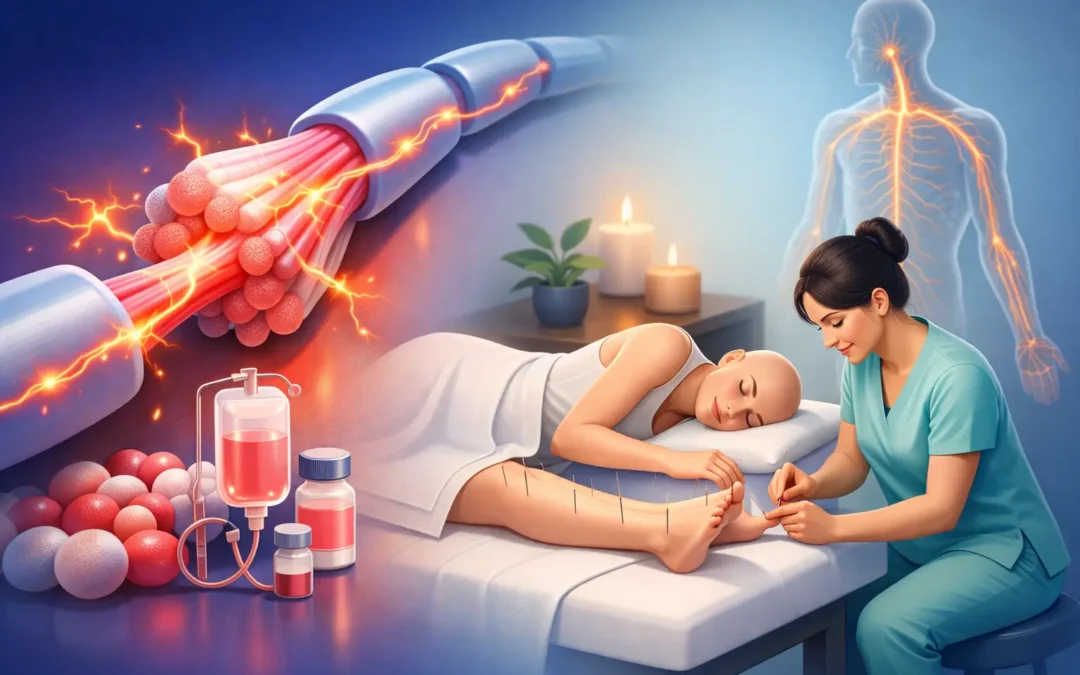
Acupuncture involves the placement of very fine, sterile needles at selected points on the body. In traditional East Asian medicine, treatment is designed to support the movement and balance of Qi, the body’s vital energy. From a modern clinical perspective, acupuncture may influence pain signaling, circulation, muscle tension, and the nervous system’s stress response.
Research into acupuncture for chemotherapy-induced neuropathy is promising but still developing. Some studies suggest it may help reduce neuropathy symptoms or improve quality of life for certain patients, while other findings are mixed. Results depend on the type of cancer treatment received, the severity and duration of symptoms, other health conditions, and the treatment plan itself.
That nuance matters. Acupuncture should not be presented as a cure for nerve damage, and it cannot guarantee that numbness or pain will disappear. Yet for many people, the goal is meaningful: fewer intense symptom days, better sleep, less tension, more comfort when moving, or a calmer relationship with a body that has been through a great deal.
At AIM Wellcare, supportive acupuncture care is individualized around the symptoms that are most affecting a patient’s quality of life. A session may focus not only on tingling or pain, but also on fatigue, anxiety, poor sleep, digestive concerns, or emotional depletion that can make neuropathy harder to carry.
What a personalized session may include
Care begins with a conversation about the pattern of symptoms, cancer treatment history, current medications, sleep, energy, mobility, and personal goals. A practitioner may ask whether discomfort is worse at night, whether cold intensifies symptoms, or whether balance has changed. These details help shape a treatment approach that respects the patient’s current capacity.
Needles may be placed in areas away from the most sensitive location, such as the arms, legs, scalp, or abdomen, depending on the treatment plan. This can be especially helpful when hands or feet are too tender for direct contact. Patients generally rest comfortably during treatment, and sessions are adjusted to avoid overwhelming an already sensitive nervous system.
Some people may also benefit from carefully selected complementary therapies such as acupressure massage, gentle Tui Na, or Qi-balancing care. Electro-acupuncture may be considered in appropriate situations, but it is not right for everyone. For example, people with implanted electrical devices, significant sensory changes, or other medical considerations need an individualized discussion before this modality is used.
Safety starts with communication
Cancer care changes quickly, and safe integrative support depends on clear communication. Before beginning acupuncture, patients should let their oncologist and treatment team know they are considering it. A qualified practitioner should also know about current treatment schedules, medications, blood counts, surgery history, ports, lymphedema risk, infections, and any areas of skin irritation or radiation sensitivity.
There are times when acupuncture may need to be postponed, modified, or avoided. Low platelet counts, very low white blood cell counts, fever, active infection, uncontrolled bleeding concerns, or a new unexplained symptom all deserve medical attention first. Needling is generally avoided in an area affected by lymphedema or at-risk lymph nodes unless the oncology team has provided guidance.
Tell your oncology team promptly if neuropathy is worsening, causing falls, interfering with hand function, or making it difficult to feel injuries or temperature. These changes may affect chemotherapy decisions and deserve timely evaluation. Integrative care works best alongside medical care, not in place of it.
Comfort at home still matters
Acupuncture appointments can be one part of a broader symptom-support plan. Between sessions, small safety and comfort measures may make daily life more manageable. Supportive footwear, clear walking paths, adequate lighting, and checking bath water temperature with an unaffected area of skin can help reduce injury risk when sensation is reduced.
Gentle movement can also be valuable when approved by the care team. A short walk, chair-based exercises, or physical therapy-guided balance work may support circulation, confidence, and function without pushing through pain. Rest is equally valid. The right amount of activity depends on energy levels, balance, treatment stage, and the body’s signals that day.
Sleep deserves attention as well. Neuropathy often feels strongest in the quiet hours, when there are fewer distractions. A consistent bedtime routine, comfortable bedding, temperature adjustments, and calming practices such as slow breathing or acupressure may help create a more settled transition to sleep. If pain or insomnia is persistent, bring it to both the oncology and acupuncture care teams so the plan can be adjusted.
What progress can look like
Progress is not always dramatic, and it is rarely linear. Some patients notice that their feet feel less restless at night. Others find that the burning sensation is less frequent, their hands feel more usable, or they are sleeping more deeply even if numbness remains. For someone who has been avoiding movement because of discomfort, feeling steady enough to take a daily walk can be a meaningful change.
A thoughtful care plan includes regular check-ins. Rather than focusing only on a pain number, it can help to notice practical markers: How long can you sleep before symptoms wake you? Are you more comfortable preparing a meal? Do you feel less anxious about walking outside? Are there fewer days when symptoms control the schedule?
The number and frequency of treatments depend on the person. Some patients choose a short series of sessions to see how their body responds. Others continue periodic care as part of longer-term symptom management. Honest communication about what is and is not changing helps keep the plan grounded in your needs.
Living with chemotherapy-related neuropathy can make the body feel unfamiliar. Supportive care offers a place to be heard, to respond gently to what is happening, and to pursue greater comfort one session and one day at a time.